
Wake up coming.

How I imagine the powers that be at Physio HQ meet...

How I imagine the powers that be at Physio HQ meet...

There have been a couple of news stories over the past 6 months that I hope have the decision makers at Australian Physio HQ (that's a thing.  I'm sure it's a thing...  well it should be a thing...) have been paying attention to.  

Firstly, quite a few months ago the Government in Australia chose to stop subsidising private health insurance rebates for a whole series of alternative treatments that - upon careful examination of all published literature - did not show any GOOD evidence of efficacy.  For a great synopsis, go here and then poke around the website and read about all sorts of interesting articles (I love that website... and yes, raw water is a health craze).

This means that as of next year, you will no longer be able to claim a subsidy for all sorts of weird and wonderful treatments.  Surprisingly, yoga and Pilates have both been included in the list of treatments no longer subsidised for the same reason: there is no credible evidence of these interventions working.  It is sad that two plausible treatment options are not to be subsidised, as opposed to some of the ludicrosities (my new favourite portmanteau I just made up - a ludicrous atrocity) such as homeopathy, iridology and faith healing...  I mean reiki...  but currently, there is no evidence of benefit for pilates and yoga as well.

So that was the first piece of news that should have "Physio HQ" shaking in it's boots. 

The second article came out in the Weekend Australian (we subscribed for a free Google Home...  I swear...) "Debatable ops Boost Premiums" (I can't link to it because it's behind a paywall...  thanks Rupert.)  Go to Twitter and follow the journos @Sarah-JaneTasker and @SeanParnell and you will get a good idea of the types of stories they're running about waste in healthcare and how the Government and health insurers are trying to rein in spending on unnecessary treatments/procedures, as well as on treatments that don't work.

The story in a nutshell is that big insurers have flagged at least $700m worth of procedures PER YEAR that either don't work, or are no better than less invasive options for the conditions reviewed.  It didn't mention that surgery also has a great deal of risk to the person being treated related to it as well (one example of a risk of surgery would be death... imagine losing a loved one to a surgery that they didn't need...), which warrants a whole other investigation.

So we have two of the key contributors to the funding of the healthcare industry - insurance companies and the Government - in Australia starting to pay attention to which treatment works, and which doesn't.  If they were to look at physiotherapy, how would we stand up?  

Ultrasound and acupuncture are considered by many practicing physios to be cornerstones of their treatment.  And yet, acupuncture works just as well if you put the needles in a rubber arm as they do when inserted into the person's actual arm, and there is no discernible difference in outcomes of ultrasound, whether the machine is plugged in or not.  Seriously.  Follow the links I've added to the above sentence.  There have been question marks over both of these options literally for decades (I started my undergrad course in '98 and ultrasound was openly questioned by my lecturers and tutors then), and yet we STILL make physio students (remember, physio is a SCIENCE degree) learn all about how to apply ultrasound to clients, and there is a whole special interest group in the Australian Physiotherapy Association dedicated just to acupuncture.

Are the powers that be frightened???

Are the powers that be frightened???

So are the powers that be at the (mythical) Physiotherapy HQ shaking in their boots?  Is there any movement towards redefining the scope of practice of a physio to exclude stuff that doesn't work?  Are we making any changes?  Clearly this change won't be driven by ethical considerations such as providing your paying customers with effective treatments, but perhaps if the threat of losing Government-subsidised private healthcare rebates were hanging over our heads, there would be a drive to either prove that these implausible treatment options work, or exclude them from what it means to practice physiotherapy.

Somebody step up please!!
Introduction to Running

So you’ve decided to get on board the biggest bandwagon going around and become a part of what’s being described as the second running boom.  Great decision!  Now we need to make sure that your transition into running a little further is as risk-free and enjoyable as possible.  There are some key considerations to be had when you’re starting a running program, which we will go through now.

The Big Picture

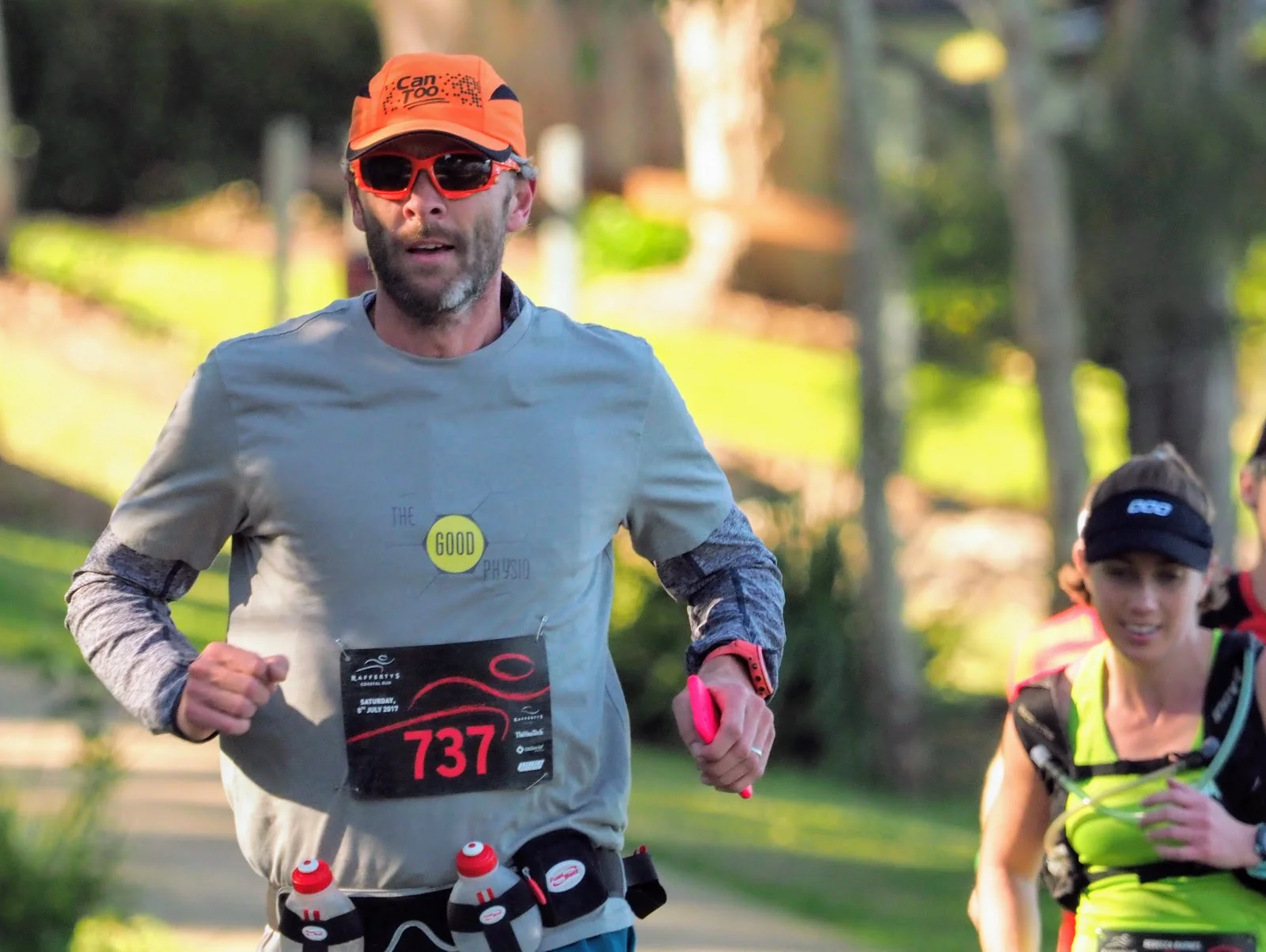
Starting a 22km trail run.  thanks to brad spalding for the photo

Starting a 22km trail run.  thanks to brad spalding for the photo

  1. You need to budget for a minimum of 2 runs per week (with a preference for 3) and a maximum of 5 (although many people don’t build up to 5 runs, even if they don’t have work and family commitments dragging them in nine other directions)
  2. Your weekly runs should be different to each other - if you’re only managing two runs, you should consider one of your runs as your “long” run (it may not be much further than the other run, but you can work on that) and the other run as your “intensity” run.  If you can fit a third run in, consider that your “tempo” run.  We’ll get to what these three types of run mean in a second.  Just remember that it is vital that you don't just run at one pace!  On race day you will inevitably run faster than the pace you've trained at.  It's human nature, just the rules of how we respond to exciting situations, so if you've never exposed yourself to running quickly, you will immediately be outside of your comfort zone and will be much more likely to blow up and have a poor race.  So get used to running faster than you anticipate you'll need to!
  3. You need to take a day off between runs to begin with - spread the runs that you do through your week, rather than jamming them all together in a row
  4. If you have a race in mind, you need to plan your training to work up to the race that you’re doing.  For example, if you’re doing the Blackmore’s Half Marathon on September 17th, then you will want to have run at least two runs further than 16km prior to that (preferably one in late August, one in early Sept).  As a super basic rule of thumb, a marathon needs a minimum of 2x 30km+ runs, and preferably 3x 30km+, with one of them being 33-35km.  Half needs a 16km and an 18km.

More specific issues

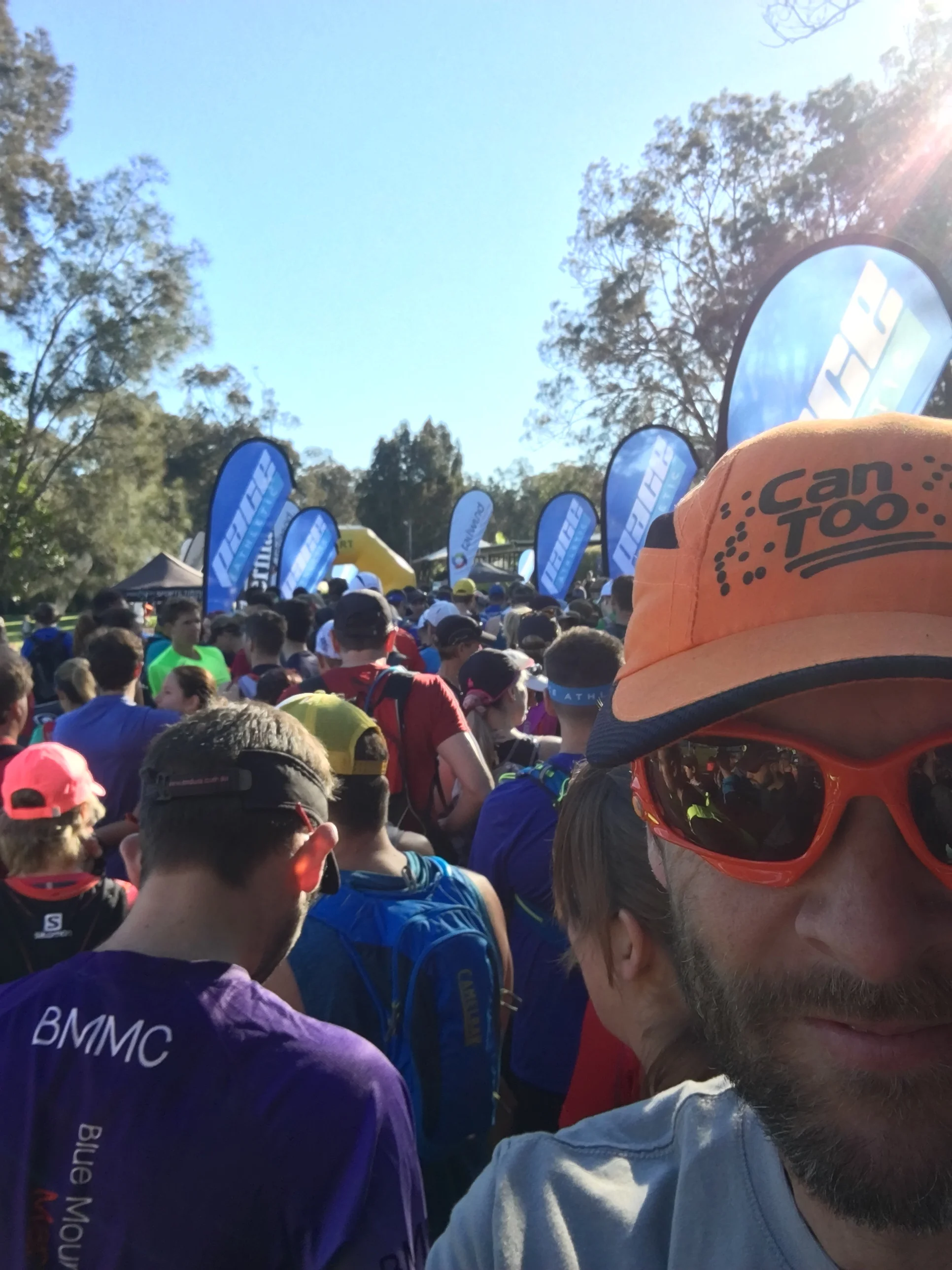
Starting chute on a trail run at raffertys resort, lake macquarie

Starting chute on a trail run at raffertys resort, lake macquarie

  1. Pacing - as mentioned above, you need to get used to running at different paces.  A good way to work out your pace zones is to do a time trial - parkrun is awesome for this - click the link and register if you haven’t already!  From there you can put in the times you should be training at for a variety of distances using a cool little online tool https://runsmartproject.com/calculator/ - this works on the premise that you train to the shape you are currently in, not the pace you want to get to.  Once you’ve entered your time for the distance you timetrialled, the calculator will tell you the approximate pace you should be looking to do your “long” run (Easy pace per km on the table); “intensity” pace (the Repetition pace from the table) and your “tempo” run (at or slightly slower than the Threshold pace from the table).  Do a retest every 4-6wks to ensure that you’re still training at the right paces as you get fitter.  And it’ll help your parkrun stats progress as well!
  2. Progression - the mileage that you build up by each week has a direct relationship with your risk of injury, so it’s important to know how much running you are doing each week to stay in the “safe” zone as much as possible.  However, the old rule of thumb of progressing your total distance by 10% each week is unnecessarily conservative when it comes to upping your mileage.  It turns out that 30% is closer to the safety threshold of what we can get away with.  This link here is a super basic version of a load calculator, and also has a great description of the science behind it.  Use that to work out how much you should be running each week.
  3. Technique - there isn’t one right answer to this.  Technique will definitely affect the efficiency with which you run, and also your risk of getting injured, but as yet there is no data as to what particular element of technique is the most important to ensure you run both well, and safely.  We think that key indicators include how the angles of your knee and shin look as your foot hits the ground (the more bent the knee and upright the angle of the shin, the better), as well as the movement of your pelvis through your gait cycle (less vertical oscillation through the stride and less braking when your foot hits the ground is better), but right now these are as yet unproven hypotheses.  The things you can do yourself include checking your cadence - most of us take a slightly slower stride than we should, which means we need to take a longer stride to make up for the extra time it takes to turn our legs over.  This overstriding is going to cause basically the opposite of all of the above measures.  So if you can spin your feet over more quickly, you’ll limit your risk of overstriding.  An easy way to measure this is to count how many times one foot hits the ground in a minute, and doubling that number.  If you’re up around the 160-180 steps per minute, you’re likely in the ballpark of where you need to be.  The other easy consideration is to try and be quiet as you run over the ground.  If you can’t hear your footfalls that easily, you’re probably running relatively safely.  Your best bet is to talk to a technique coach and get some objective, external feedback (preferably with videos and cue suggestions) to improve this.  http://runbetter.com.au/ is a great place to start for this if you live in Newcastle!
  4. Body Maintenance - the final consideration in getting started with a running program is what to do in between runs, and how to minimise your risk of getting injured due to simple muscle weakness, asymmetry or tightness.  Stretching is not the answer here.  I repeat: stretching is NOT the answer!!  “What is the answer then?” I hear you say…  This is where your local Good Physio comes into the picture (hint hint!!)  Common running injuries that we look to get in front of include shin splints, ITB friction syndrome, patellofemoral pain syndrome and trochanteric bursitis (which turns out to be a gluteal tendinopathy, but the name hasn’t caught on yet).  Measurements that we take to aid with identifying key potential areas of heightened risk are all objective, and the exercises prescribed are directly targeted at correcting any weaknesses or limitation that we’ve exposed.

Winter Runderland

Saturday May 13th is the day that will be three months out from the City 2 Surf and 18 weeks from the start of the Blackmore's Sydney Running Festival, come to this seminar run by The Good Physio. 

Topics covered will help you train with less risk of injury, more enjoyment of running itself, and potentially even improved performance!

These topics include -
- The Department of Silly Walks (running drills - how and why)
- Load Management and Progression
- Preventative Exercises for Common Running Injuries
- Heresies - Walk-Run, Hydration, Nutrition
- Technique and equipment

The talk starts at 4pm down at Cornerstone S&C gym in Adamstown.  I hope to see you there!

Posture, futility and the London marathon

With the London marathon happening this weekend, my mind is taken back to a conversation I had with Australian long distance gun Lee Troop (represented Australia at 3 Olympic Games for the marathon, and ran sub 2hr 10min on multiple occasions).  We were on an altitude camp in St Moritz, Switzerland (yes, I know - the hardships that I have had to endure in pursuing my craft have been more than most could handle.  Some would call me a hero for surviving work in an exclusive European ski resort with elite athletes...)

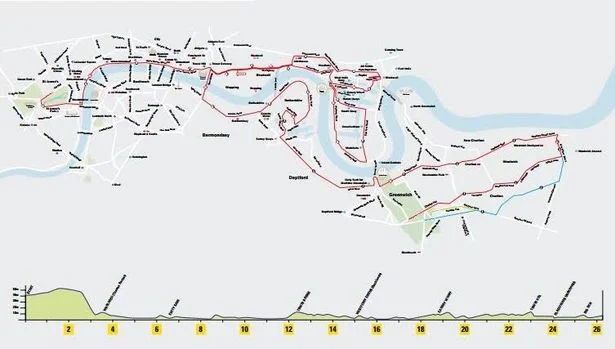
I asked Troopy which marathon he had found the hardest of those that he ran, and was surprised when he said London.  My surprise came from knowing that the course is pretty much flat (as you can see from the profile below with thanks to www.getwestlondon.co.uk for the image)

The route & profile of the London marathon - after an early descent, it's a pancake flat course

The route & profile of the London marathon - after an early descent, it's a pancake flat course

Obviously I needed to know why he found a FLAT course so hard, and Troopy said the main issue was that his back got really tired and sore.  He said on hilly courses you have to change your posture regularly to deal with the terrain, but in a flat race you're just locked into your position and away you go for a couple of hours.

This person, who was arguably one of the fittest people in the country at the time couldn't handle staying still for two hours.

Needless to say this drove home to me that no matter how fit you are, and how "good" your posture is, you can't just rely on this to have a pain-free back.  Having a fit back and good postural habits are the start, but the key extra ingredient is movement.  Here at The Good Physio, our belief is that movement is medicine, and we can help you to work out strategies to not only get you through the times when you're struggling with a sore back, but also give you some simple "body maintenance" tools to keep the back pain wolves at bay.  This allows you to be out there training for your next/first marathon rather than hobbling around with a sore back.

Concussion, bad news and best practice

Over the weekend the news filtered out that James McManus, a former NRL player for the Newcastle Knights, would be suing his club over the way multiple injuries to his head were handled.  Concussion and mild brain injuries, and the long term side effects to these injuries have been gaining a great deal of attention over the last five or so years after former NFL (American Football) players successfully sued the NFL for covering up the severity of the problems that can ensue from head knocks (for an awesome documentary on that class action, check out this link).

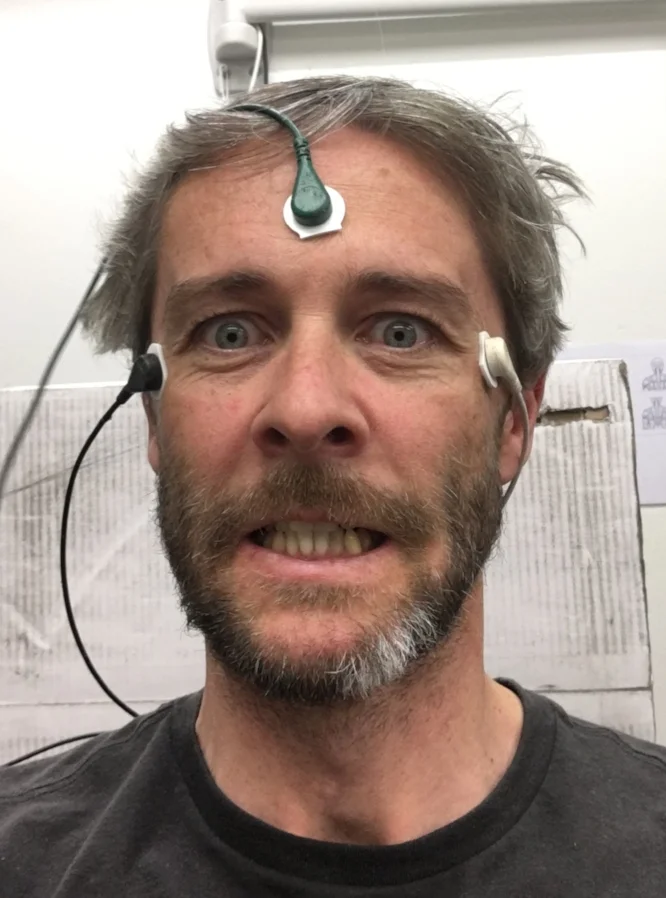
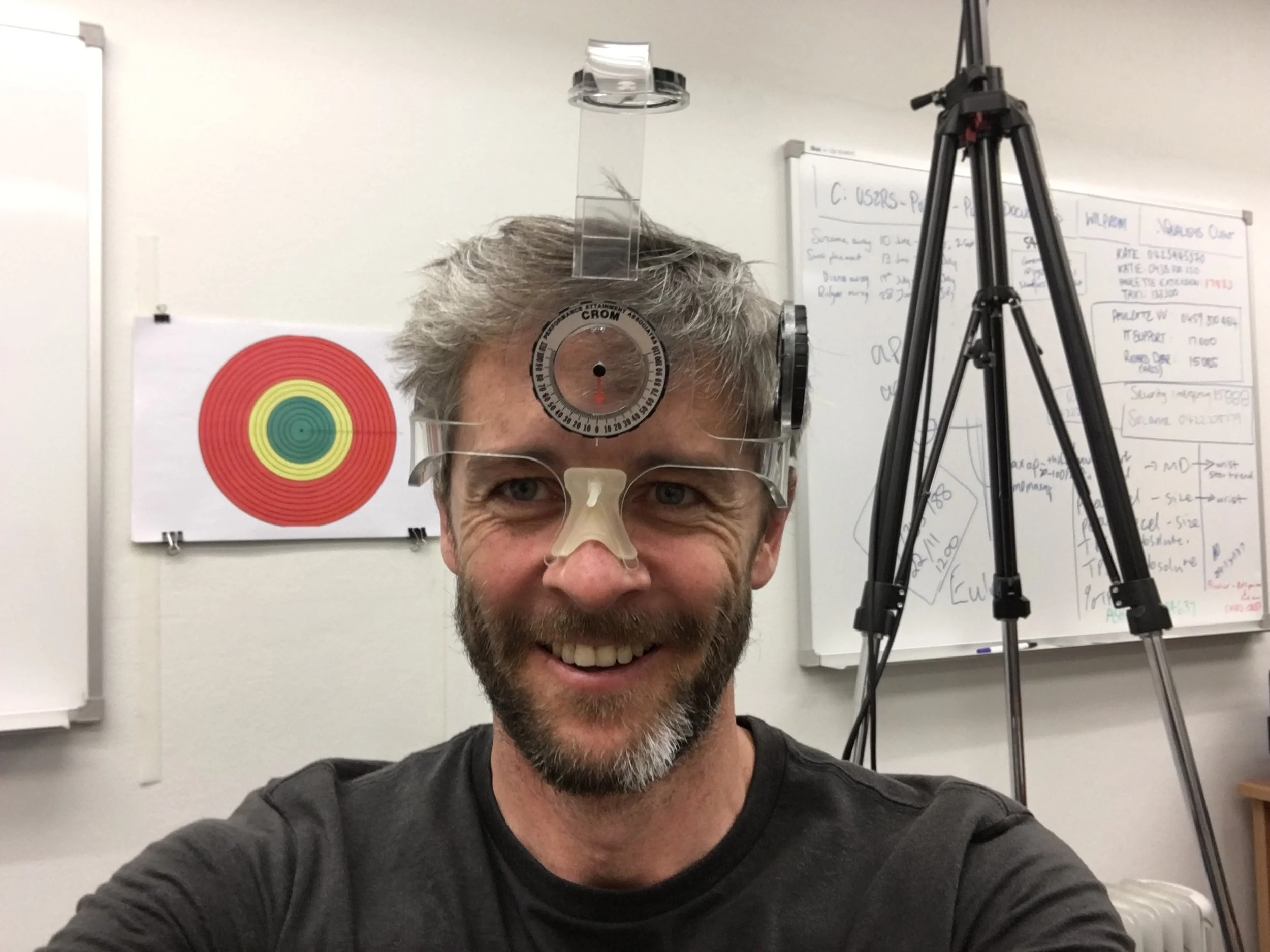
Me in the midst of undertaking the neck position sense testing up at the Uni of Newcastle with Rutger de Zoete

Me in the midst of undertaking the neck position sense testing up at the Uni of Newcastle with Rutger de Zoete

With the huge increase in interest, as well as the enormous financial incentive that clubs have in keeping their players healthy both in the short- and long-term, there has been an equivalent explosion in research and understanding of what constitutes best practice for both short- and long-term treatment of concussion.

The AIS and AMA have recently combined and released their position statement on concussion, which is comprehensive to say the least.  Of particular interest to me as a physio is firstly how much advice has evolved to be pushing more mobility and motor control work more quickly, and secondly how the longer term physical concerns that on occasion follow concussion appear to be greatly assisted with neck-related treatment, including strengthening and position sense training.

I have been lucky enough to get involved with some research into these types of neck-related issues at the University of Newcastle, and am excited to be able to provide treatment that is genuinely cutting-edge for people with post-concussion syndrome and other neck-related injuries.